2026 State of Merchant Onboarding is out
Get the Report


The bottleneck isn't your underwriter. It's the manual process feeding them incomplete data from three different systems. Merchant underwriting automation from Gratify delivers a complete risk package in 60 seconds so the underwriter can do what they're actually good at.
We talk to ISOs and PayFacs every week. The story is the same. Underwriters pull statements from one system, check registries in another, and cross-reference ownership records in a third. They're doing data entry, not risk analysis. Underwriting automation in payments changes this by assembling the risk package before the underwriter touches it.

Your underwriters spend 30 to 45 minutes per application gathering documents, not reviewing them. By the time they start the actual risk review, half their day is gone.
Two underwriters review the same application and reach different conclusions because they pull different data. When your sponsor bank requests an audit, your team scrambles. The approval decision lived in someone's head, and the supporting data lived across three systems.
A merchant submits a statement. 60 seconds later, the underwriter opens a finished risk package. Average monthly volume, refund and chargeback exposure, delayed delivery risk, and a pre-calculated reserve recommendation, all assembled automatically from statement analysis and identity verification data. The underwriter reviews and decides. The platform serves their judgment. It doesn't replace it.
Every ISO and PayFac underwrites differently. Our automated merchant underwriting software lets you define rules per MCC code, volume tier, and risk category. A high-volume restaurant and a new e-commerce merchant don't run through the same checklist. New underwriters apply the same logic as experienced staff. The system enforces consistency without removing discretion.
Every decision, every override, every rule that fired is recorded. When compliance reviews happen, the entire underwriting history for any merchant is available in one click. No reconstructing decisions from memory. This is what credit risk assessment looks like when the record exists from day one.

Merchant risk scoring software that calculates exposure based on volume, chargeback history, industry risk, and delayed delivery. Every factor is visible to the underwriter with a clear explanation.
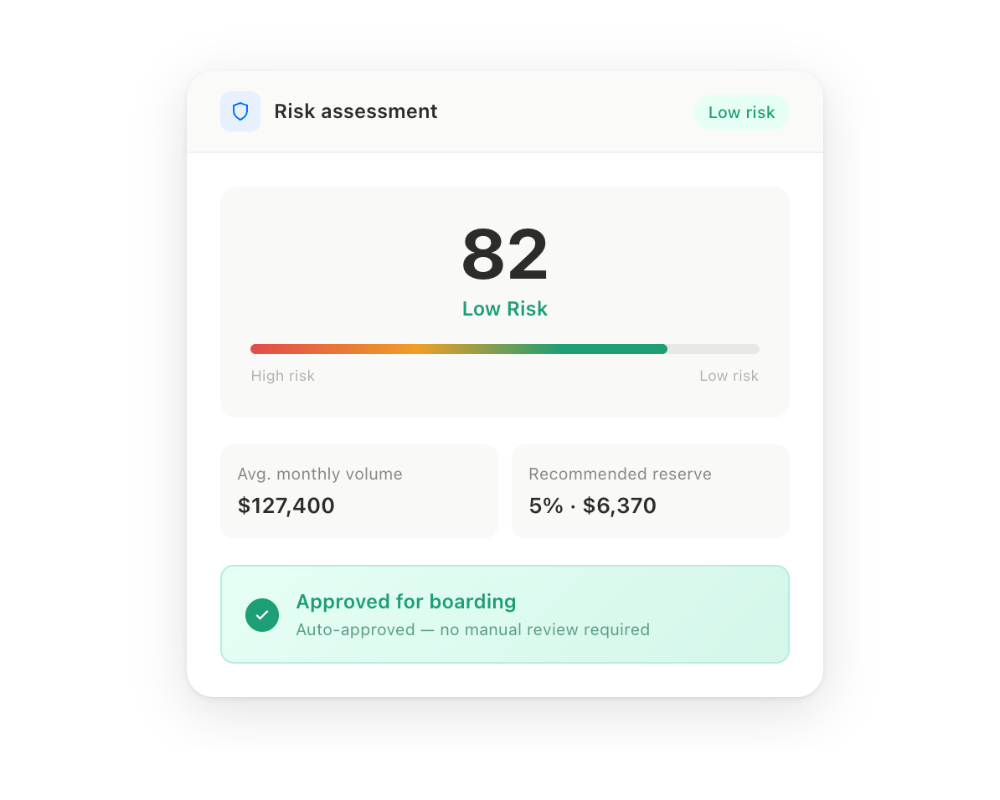

Pre-calculated reserve percentage based on the merchant's specific risk profile. The underwriter reviews and adjusts instead of calculating from scratch.
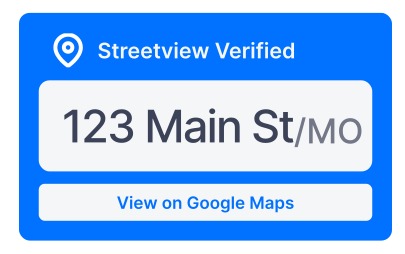

Applications queue by priority so your team works the files that matter most. High-risk flags for senior review, low-risk surfaces for fast-track approval.
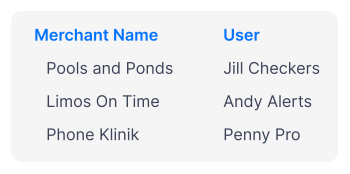

Configurable rules per MCC, volume tier, business type, and risk level. Your risk appetite is applied consistently across every underwriter on your team.
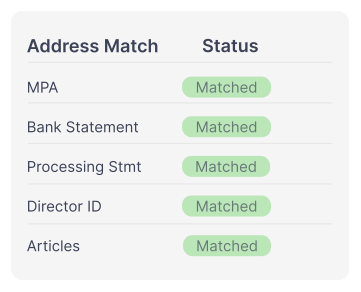

Every decision, override, and rule that fired is logged with a timestamp. Compliance reviews don't require reconstruction.
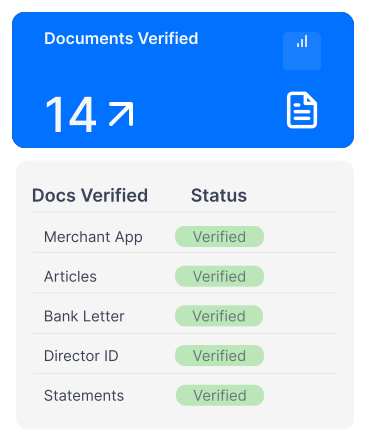

Risk packages pull from Statement Analyzer and Merchant ID verification, then approved merchants pass to 1-click processor boarding. One record, no re-entry.

Merchant underwriting automation doesn't work in isolation. Gratify's risk packages pull from Statement Analyzer and Merchant ID verification. Approved merchants pass directly to 1-click processor boarding at Fiserv, TSYS, or your processor of choice. One merchant record through the full lifecycle with no re-entry.








Complete risk package with volume analysis, exposure scoring, and reserve recommendation. Assembled from the merchant's submitted data without manual assembly.
Every application scored against the same criteria, every time. No variation between underwriters. No gaps in the rules applied.
Full underwriting history and compliance export for any merchant in your portfolio. Decision record, override log, and supporting data in one export.
Book a demo. We'll walk through how the 60-second risk package works with your underwriting rules and your processor connections.