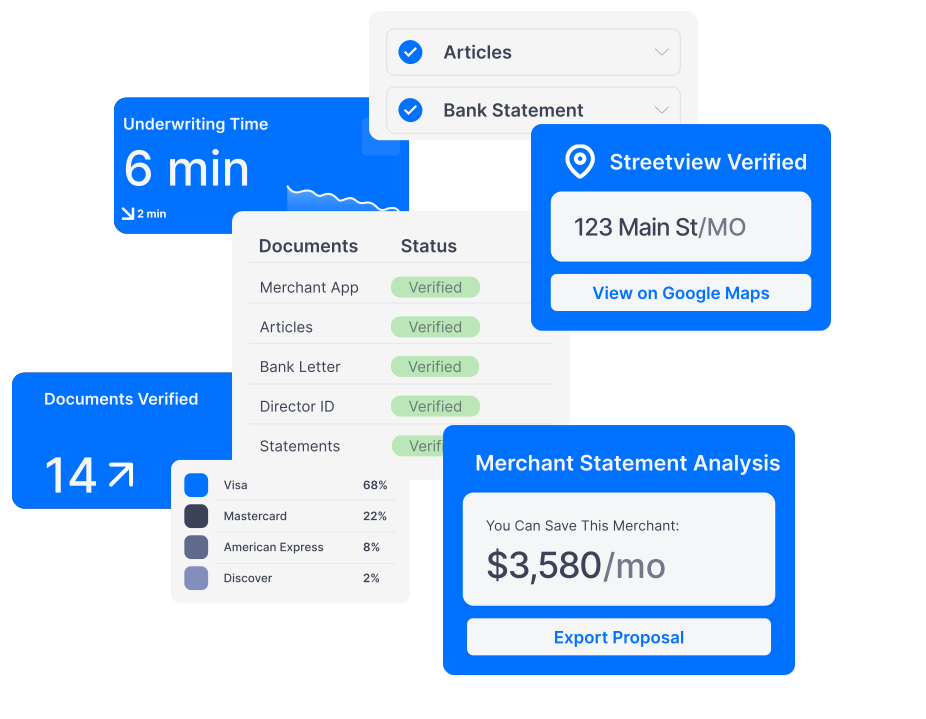
Automated credit risk assessment cuts merchant onboarding time by up to 90% while reducing fraud losses by 30–50%. For payment ISOs, PayFacs, and MSPs under pressure to onboard merchants quickly without increasing risk exposure, AI-driven credit solutions offer the most practical path forward.
This matters for three reasons: automation eliminates manual bottlenecks that slow approvals, real-time monitoring catches fraud before it becomes costly, and data-driven decisions improve accuracy across every merchant evaluation.
Why Manual Credit Assessment No Longer Works
Manual underwriting creates operational drag. Traditional credit reviews take 3–5 business days, require dedicated staff, and introduce human error at every step. As your merchant portfolio grows, so does the strain on your team.
Automated credit risk assessment replaces spreadsheets and manual checks with algorithmic analysis. The result is faster decisions, consistent evaluations, and approval times measured in minutes rather than days.
Payment processors using automation report:
- 70–90% reduction in onboarding time from days to under 30 minutes
- Up to 40% decrease in underwriting labor costs
- 25% improvement in evaluation accuracy through reduced human error
These gains compound. Faster onboarding means merchants start processing sooner. Lower costs mean better margins. Higher accuracy means fewer losses down the line.
How AI Changes Credit Risk Outcomes
AI strengthens credit risk management by analyzing data at a scale and speed humans cannot match. Modern platforms pull from 30+ data sources to build comprehensive merchant risk profiles in real time.
Here's what AI-powered systems actually do:
- Detect anomalies instantly. Transaction spikes, unusual payout patterns, and sudden behavioral shifts trigger immediate alerts rather than waiting for monthly reviews.
- Score risk in real time. Predictive models trained on historical transactions, credit signals, and behavioral markers deliver accurate assessments during the onboarding process itself.
- Enable proactive intervention. Teams address emerging risks before they become losses instead of reacting after the fact.
This approach aligns with recent research on merchant-oriented risk strategies. A 2025 study on automated risk control in e-commerce found that tailoring controls to individual merchants improves overall effectiveness while reducing the resource intensity of manual allocation decisions.
Three Ways Automation Improves Merchant Onboarding
Automating merchant onboarding delivers measurable improvements across your entire operation. The benefits fall into three categories.
1. Faster Data Collection and Verification: AI-powered data extraction pulls key details from documents, web sources, and transaction records automatically. Accuracy rates exceed 95%, which dramatically reduces manual-entry errors and accelerates the timeline from application to approval.
Higher-quality inputs make your credit risk models more reliable. Better data in, better decisions out.
2. Streamlined Workflows: Automated workflows remove the bottlenecks that slow traditional onboarding. Identity verification, credit checks, and compliance screening happen in parallel rather than sequentially.
Organizations using end-to-end automation report onboarding time reductions of up to 70%. That means faster revenue recognition without sacrificing evaluation quality.
3. Reduced Underwriting Errors: Automation replaces manual entry and cross-checks with real-time algorithmic validation. Systems surface discrepancies immediately so human reviewers focus only on exceptions.
The result is a 30% reduction in error rates and consistent data integrity across every merchant file.
AI-Driven Fraud Prevention That Actually Works
Fraud prevention at onboarding is where AI delivers some of its clearest ROI. Catching risk early prevents downstream losses that compound over time.
Effective AI-driven fraud prevention combines three techniques:
-Real-time detection. AI inspects transactions live and flags suspicious activity with accuracy above 90%. Systems can block anomalous transactions within milliseconds.
-Behavioral analytics. Models profile normal merchant behavior and detect deviations that signal risk before they escalate.
-Predictive modeling. Historical patterns power forecasts of likely fraud scenarios so your team can apply controls proactively.
Research supports this layered approach. A 2022 study on AI-driven fraud detection in e-commerce found that combining machine learning with real-time analytics significantly improves detection rates while reducing false positives.
Payment processors using these techniques report up to 50% reduction in fraud-related losses.
Continuous Monitoring Keeps Risk in Check
Onboarding is just the beginning. Continuous monitoring maintains oversight after merchants go live, catching risks that emerge over time.
Automated monitoring systems watch transaction patterns and compliance signals in real time. When a merchant's risk profile changes based on predefined thresholds, your collections and risk teams receive immediate alerts.
Key tools that enable ongoing surveillance include:
- Automated monitoring systems that analyze transactions and merchant behavior continuously
- Data analytics platforms that identify trends and surface anomalies before they become problems
- Compliance management software that tracks regulatory posture and simplifies audit readiness
Organizations using continuous monitoring report up to 30% reduction in fraud and credit losses compared to periodic review approaches.
Scaling Without Adding Headcount
For growing payment operations, the strategic value of automation is clear: you can scale without proportionally increasing staff.
Automated systems process thousands of credit checks and transactions in parallel. This scalability can lower onboarding costs by up to 35% while shortening approval times and improving the merchant experience.
What This Means for Your ISO
Automated credit risk assessment transforms payment processing by improving speed, accuracy, and fraud prevention simultaneously. With AI and real-time analytics, you can cut approval times, lower operating costs, and strengthen risk controls across your merchant portfolio.
The technology exists today. The outcomes are measurable. The competitive pressure to adopt is real.
Ready to see how automation can modernize your credit risk operations? Book a personalized risk automation assessment with Gratify and discover what streamlined merchant onboarding looks like for your team.
Calculate your onboarding costs
ISOs processing 1,000 merchants/year spend $250K on manual onboarding. See your numbers.
Get Your Cost Analysis