Continuous monitoring transforms merchant risk management from a one-time approval decision into an ongoing intelligence operation. Instead of onboarding a merchant and hoping they remain low-risk, you establish automated checkpoints that catch fraud, compliance drift, and portfolio degradation before they cost you money. This approach reduces manual review volume by up to 70% while identifying high-risk behaviors weeks earlier than traditional quarterly audits.
This matters for three reasons. First, merchant behavior changes constantly: a low-risk business can shift to high-risk processing patterns within days. Second, regulatory expectations have evolved beyond point-in-time KYB checks to require ongoing due diligence. Third, your portfolio health is only as strong as your weakest merchant, and manual spot-checking simply can't scale with portfolio growth.
Most ISOs and PayFacs treat merchant onboarding as a finish line. You verify identity, check a few documents, approve the account, and move on. The problem surfaces 45 to 90 days later when chargebacks spike, compliance flags appear, or fraud patterns emerge. By then, you've already absorbed losses and created regulatory exposure.
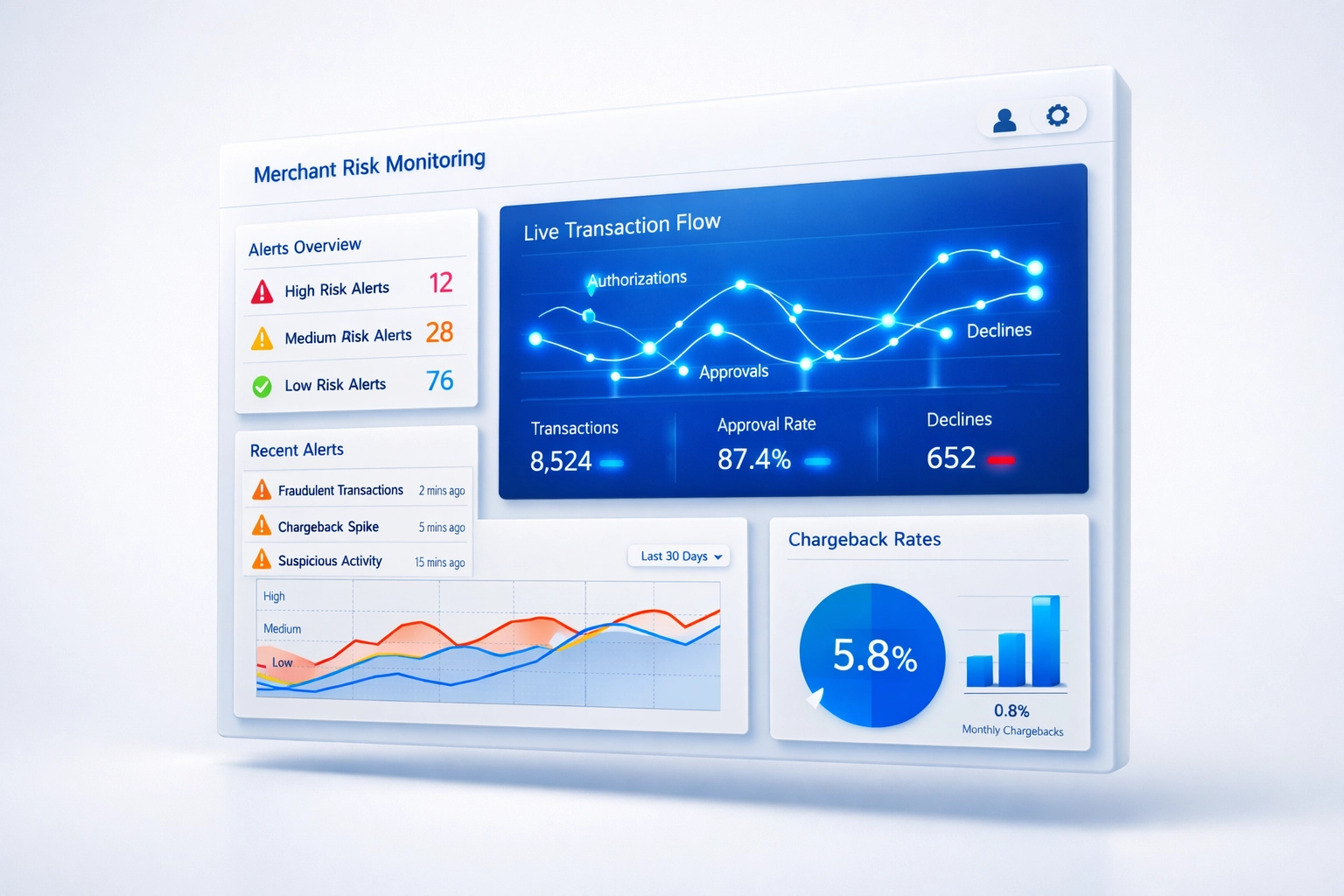
Manual review processes can't keep pace with portfolio velocity. If you're adding 200 merchants monthly and conducting quarterly reviews, you're monitoring 2,400 merchant-months of activity in batches every 90 days. Risk doesn't wait for your review schedule. A merchant processing counterfeit goods or layering synthetic identities needs immediate detection, not quarterly attention.
The alternative is policy-based continuous monitoring that watches specific risk indicators in real time. You define the rules: velocity thresholds, transaction pattern anomalies, document expiration dates, negative news hits: and automation flags exceptions as they occur. Your team only investigates when guardrails are breached.
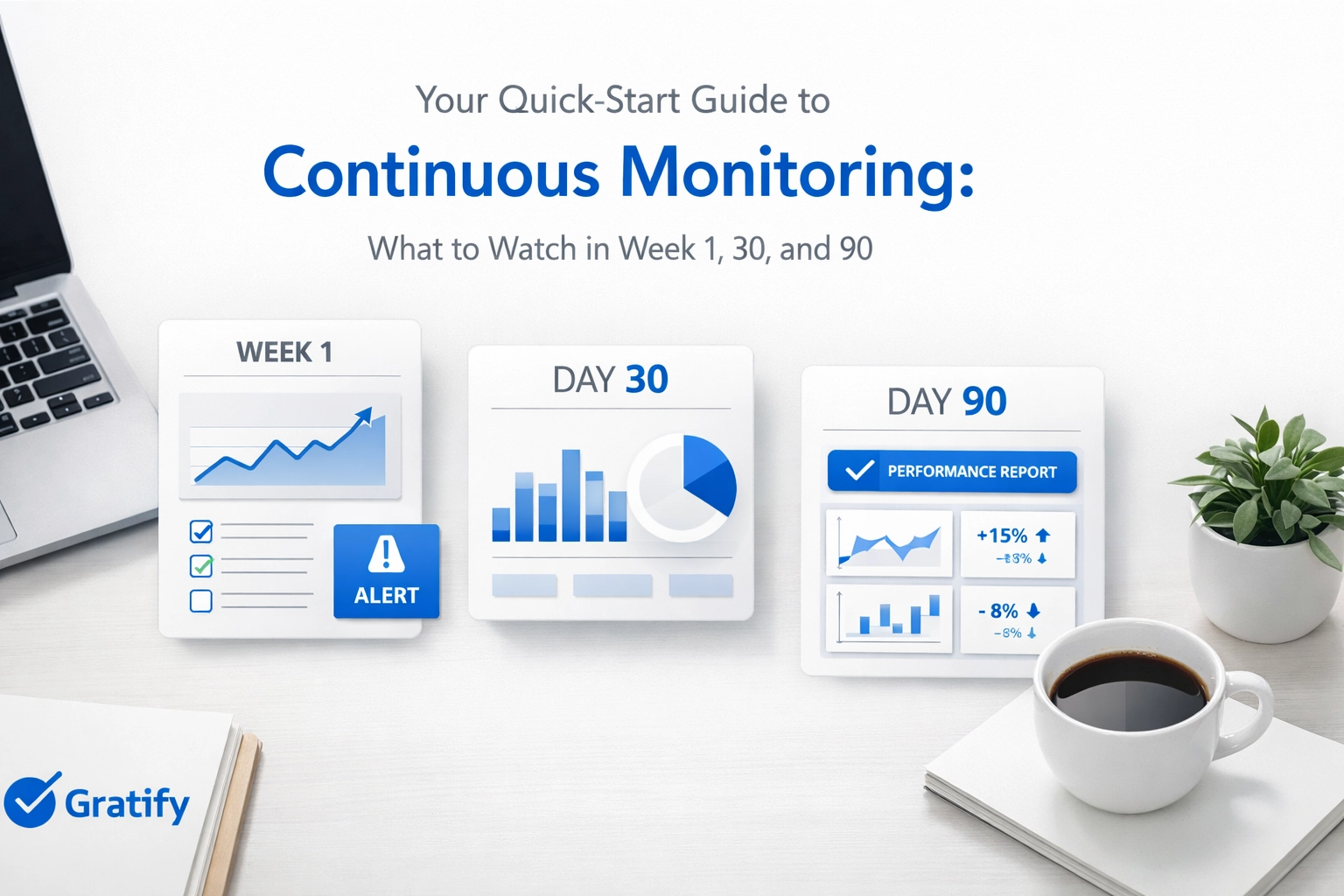
Your first week of continuous monitoring focuses on verification accuracy and establishing behavioral norms. This is where you confirm the merchant is who they claim to be and document their initial transaction patterns as a baseline for future comparison.
Identity verification should be layered and automated. Start with business registry checks, beneficial owner identification, and document authentication. But don't stop there. Cross-reference registration addresses with processing addresses. Verify website authenticity and domain age. Check for negative news associated with principals. These checks should happen automatically during onboarding and immediately flag discrepancies for review.
Behavioral baselines matter more than you think. A merchant's first week of processing tells you their normal operating range. Average ticket size, transaction frequency, peak processing hours, refund rates, and geographic distribution create a fingerprint for that business. When behavior deviates significantly from this baseline in week 8, you have an early warning signal.
Document these metrics systematically. Track average daily volume, ticket size distribution, and initial chargeback rates. Note processor connectivity patterns and authentication success rates. This data becomes your reference point for identifying drift later.
AI-driven monitoring can establish these baselines automatically without manual data entry. The system learns what "normal" looks like for each merchant and creates dynamic thresholds based on their specific business model rather than applying blanket rules across your entire portfolio.
Thirty days of processing history reveals patterns invisible during onboarding. You're watching for early warning signals that indicate fraud, business model shift, or compliance risk before they escalate into portfolio-wide problems.
Volume and velocity changes require immediate attention. A merchant processing $5,000 daily who suddenly jumps to $50,000 needs investigation. This could indicate legitimate business growth, account takeover, or deliberate fraud staging. Similarly, merchants who dramatically change their average ticket size or transaction frequency deserve scrutiny.
Transaction timing patterns tell stories. Merchants who suddenly shift from daytime to overnight processing, who concentrate volume in specific time windows, or who process in unusual geographic patterns warrant review. These behaviors often precede fraud events or indicate processing violations.

Refund and chargeback velocity matters at day 30. Industry benchmarks suggest monitoring any merchant exceeding 1% chargeback ratio, but you should track trajectory, not just absolute numbers. A merchant at 0.3% in week 2 who reaches 0.8% by day 30 is on a concerning path even though they're technically within acceptable limits.
Authentication failure rates provide another early signal. Merchants with increasing card authentication failures or AVS mismatches may indicate stolen card testing or customer friction that leads to disputes. Track these metrics weekly and flag significant increases.
Policy-based guardrails automate these checks without manual intervention. You configure rules based on your risk tolerance: velocity thresholds, geographic restrictions, ticket size limits: and the system enforces them automatically. When merchants breach thresholds, you receive alerts with full context rather than discovering problems during manual reviews weeks later.
By day 90, you shift from individual merchant monitoring to portfolio-level intelligence. You're analyzing aggregate trends, compliance posture, and identifying systemic risks that affect multiple merchants or indicate broader issues.
Document expiration and compliance maintenance become critical. Business licenses expire. Insurance policies lapse. Beneficial ownership changes. These events create compliance gaps that regulators care about. Automated monitoring tracks expiration dates across your portfolio and flags renewals 30 days in advance, eliminating the scrambling that happens during annual audits.
Portfolio concentration risk emerges at scale. When 40% of your portfolio suddenly processes in the same high-risk vertical, you have exposure concentration that wasn't visible at the individual merchant level. Day 90 analytics should highlight these concentrations and help you make strategic decisions about portfolio composition and risk limits.
Industry comparison provides context for merchant performance. A merchant with a 0.9% chargeback rate looks problematic until you realize the industry average for their vertical is 1.3%. Portfolio-level benchmarking helps you identify genuine outliers versus merchants operating within vertical norms.

Emerging fraud patterns require portfolio-level detection. If five merchants in your portfolio suddenly show similar suspicious behavior: same shipping addresses, similar transaction patterns, coordinated timing: you're likely seeing organized fraud rather than isolated incidents. Continuous monitoring that analyzes across merchants identifies these patterns weeks before fraud losses materialize.
Regulatory reporting becomes dramatically simpler with continuous monitoring data. When auditors request merchant due diligence documentation, you provide real-time dashboards showing ongoing compliance checks rather than pulling quarterly reports. When regulators ask about suspicious activity monitoring, you demonstrate daily automated screening rather than monthly manual reviews.
Effective continuous monitoring requires three components: data collection, intelligent automation, and exception-based workflows. You need systems that gather merchant data continuously, apply risk rules automatically, and route only genuine exceptions to your team for review.
Start with the metrics that matter most to your business. Payment velocity, chargeback rates, and document compliance create the foundation. Layer on industry-specific indicators relevant to your portfolio composition. Add custom rules based on your historical loss data and fraud patterns.
Integration matters significantly. Your monitoring system needs connectivity to payment processors, banking partners, identity verification services, and compliance databases. Real-time data feeds enable real-time decisions. Batch processing creates the delays that allow risk to accumulate undetected.
The goal isn't eliminating manual review entirely: it's focusing human expertise where it adds value. Automation handles routine monitoring and flags exceptions. Your team investigates flagged cases, makes judgment calls on edge cases, and handles complex situations that require context and experience.
For ISOs and PayFacs managing hundreds or thousands of merchant relationships, continuous monitoring shifts from operational burden to competitive advantage. You onboard faster, identify risk earlier, and demonstrate stronger compliance posture to acquiring banks and regulators.
The merchants who looked low-risk at onboarding but became high-risk by day 60? You caught them at day 35. The compliance documentation that would have created audit friction? Automatically tracked and updated. The manual reviews that consumed 40% of your underwriting team's time? Reduced to investigating genuine exceptions.
That's the difference between monitoring as a point-in-time check and monitoring as a continuous intelligence operation. Learn more about how AI-driven risk monitoring transforms merchant onboarding and ongoing portfolio management.