2026 State of Merchant Onboarding is out
Get the Report


LegitScript is the industry's most recognized name in merchant monitoring and content compliance. They hold Mastercard MMP certification. They monitor merchant websites for prohibited content, regulatory violations, and brand risk. For acquirers that need ongoing merchant monitoring and MMP-certified compliance, LegitScript is the established provider, and that reputation is deserved.
LegitScript started as a merchant monitoring company. In late 2025 it acquired Kompliant, adding underwriting — a valid strategy, and a real signal that buyers want lifecycle coverage, not just monitoring. The question for buyers is whether acquired components share a single merchant record: whether the underwriting decision reads from the same profile the monitoring engine screens, and whether data flows between modules without manual reconciliation. Acquired tools typically share less than the marketing suggests. LegitScript still doesn't offer statement analysis, branded applications, processor boarding, or revenue assurance. The acquisition added one stage. The merchant lifecycle has five.
Where LegitScript stops at monitoring (and Kompliant adds underwriting), Gratify covers the four other stages of the merchant lifecycle.
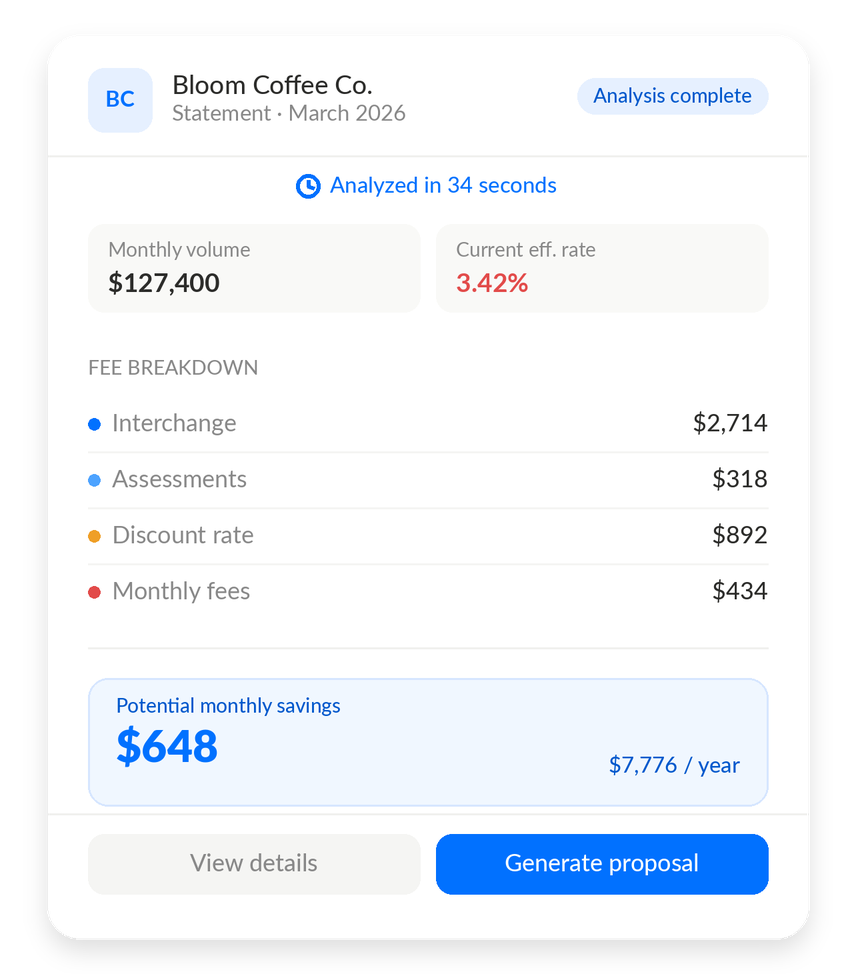
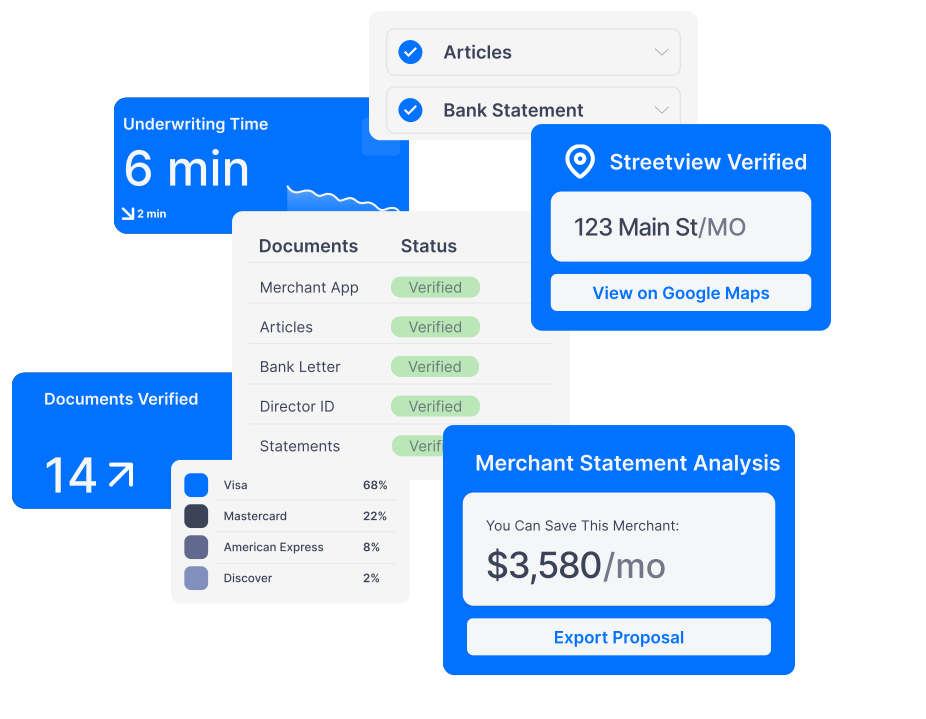
Your rep uploads a merchant statement. Gratify returns a margin analysis and branded quote in 60 seconds. The pre-application stage is the entire reason your sales motion accelerates — and LegitScript's monitoring stack has no answer for it.
Twenty to forty-five minutes of manual statement review collapses into the time it takes to send a follow-up email. Your reps win deals on accurate pricing instead of estimates.
The analysis pulls processor fees, surcharges, and ancillary line items into a single branded view per ISO. The merchant sees pricing they can act on, not a generic pitch.
LegitScript monitors merchants after they're live. Statement Analyzer runs before the application even opens.
Neither LegitScript nor Kompliant touches this stage. The deal starts at statement analysis, not at the compliance check.
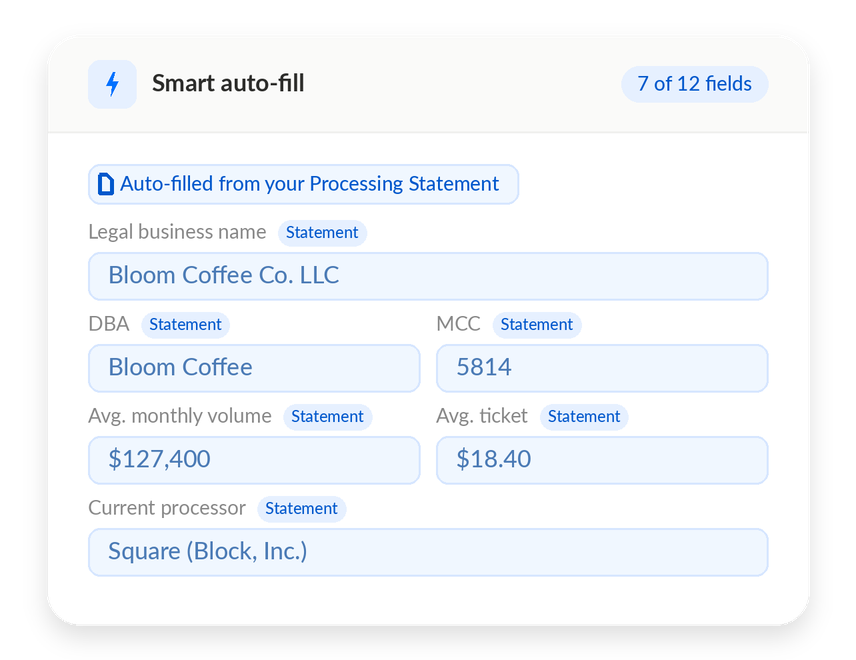
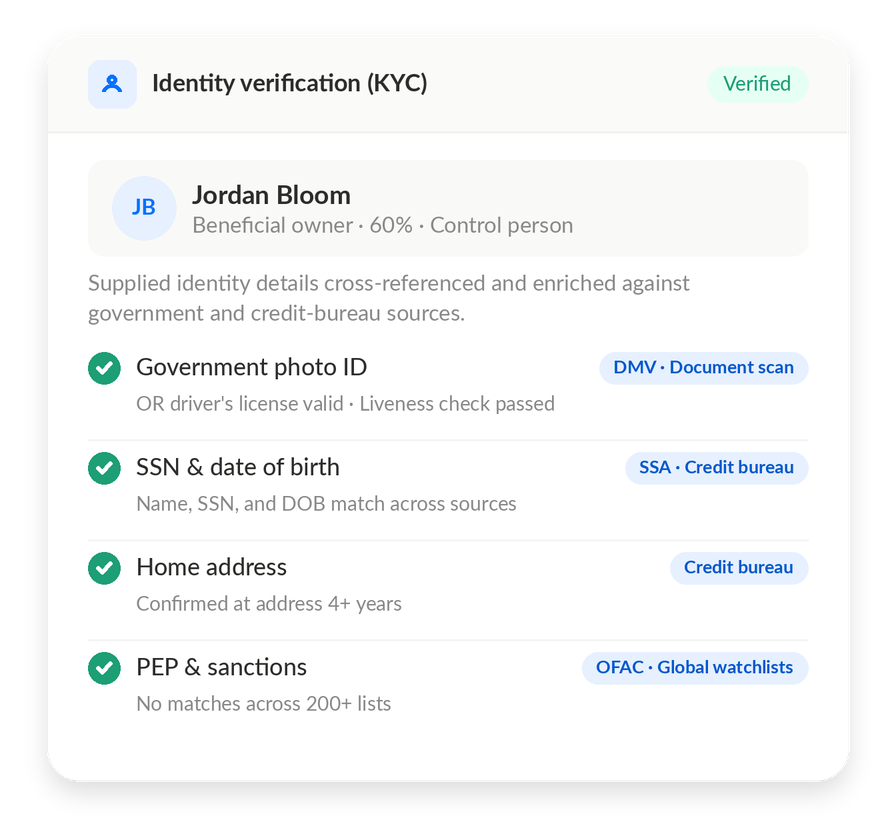
Each ISO gets a branded subdomain for merchant applications. The merchant fills out one form. KYC/KYB verification, OFAC sanctions, BBB lookup, prohibited MCC validation, and eSignature all run automatically inside the same flow.
LegitScript focuses on website content monitoring. Gratify embeds compliance — KYC/KYB, OFAC, PEP/sanctions, BBB, MCC validation — inside the branded merchant application itself, with daily rescreening on the back end.
The merchant doesn't see a compliance UX bolted onto an application. They see one branded form that knows what it needs. Your underwriting team doesn't re-enter merchant data from a separate verification system.
LegitScript runs as a separate monitoring layer. Gratify ships the branded application with verification embedded by default, on one merchant record.
Daily PEP and sanctions rescreening continues after onboarding.
Compliance is a continuous stage in the merchant's life, not a one-time gate.
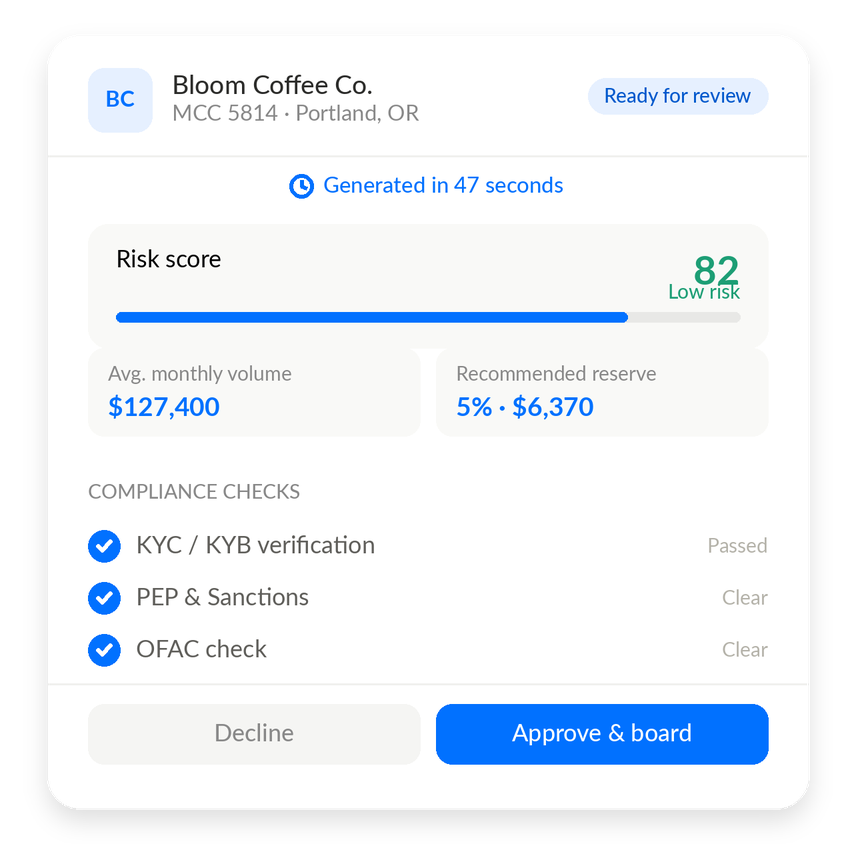
62+ configurable data points across three risk categories. Letter-grade scoring (A/B/C/D) with reserve recommendations. 1,627 MCC codes with chargeback ratios. ISO-configurable rules. Kompliant added underwriting to LegitScript via acquisition; Gratify built it on the same merchant record as every other stage.
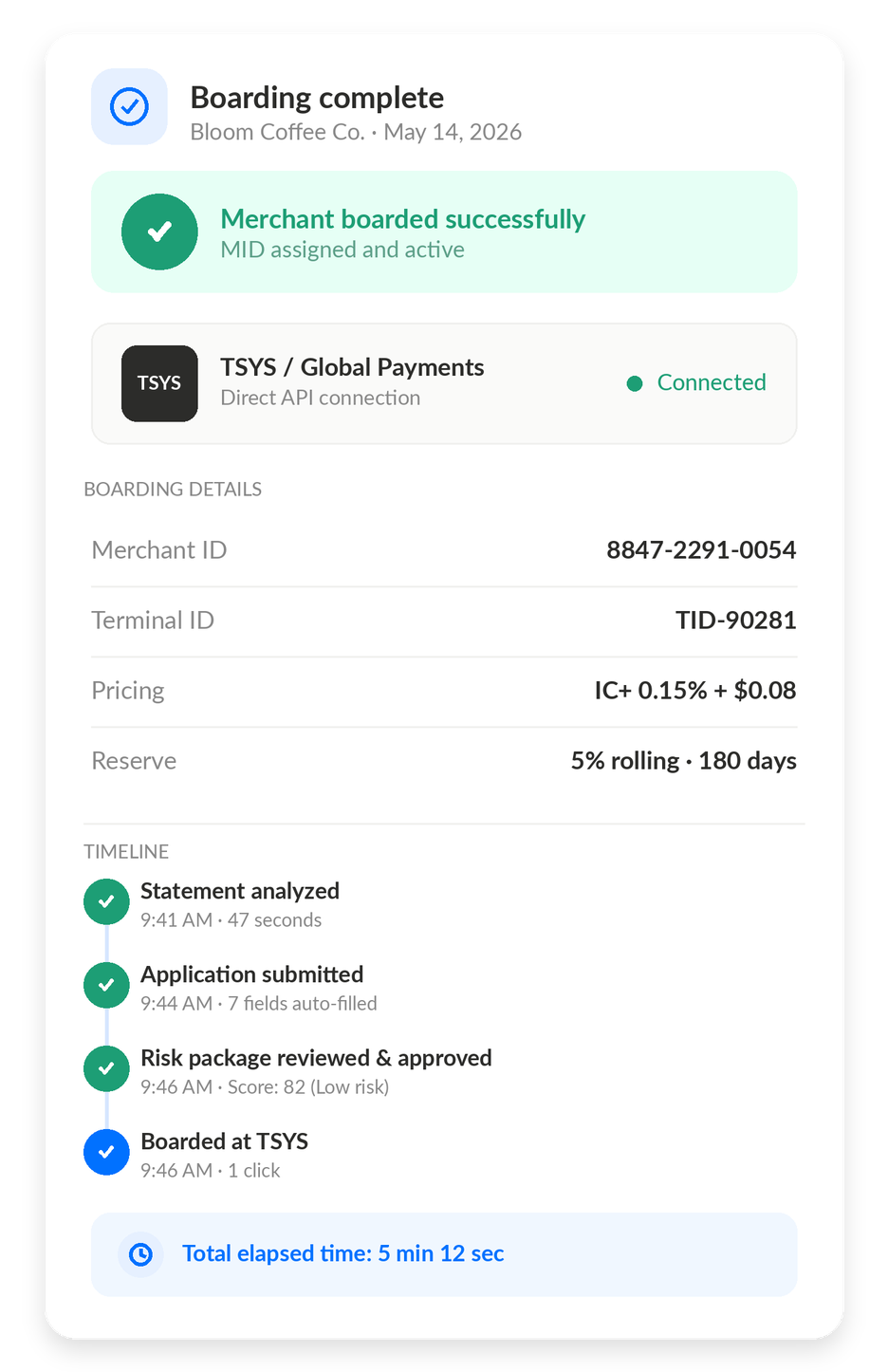
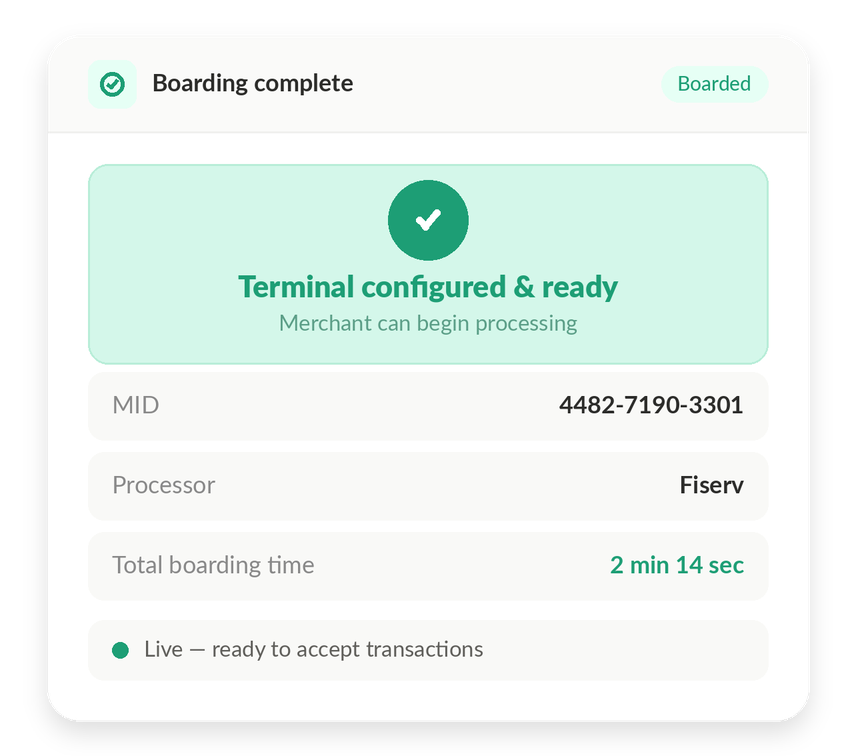
Direct API boarding to TSYS, Dejavoo, Repay, and Fiserv. One click from approved merchant to live processor. Neither LegitScript nor Kompliant boards merchants to processors. This is where the monitoring-plus-underwriting stack hits its wall.
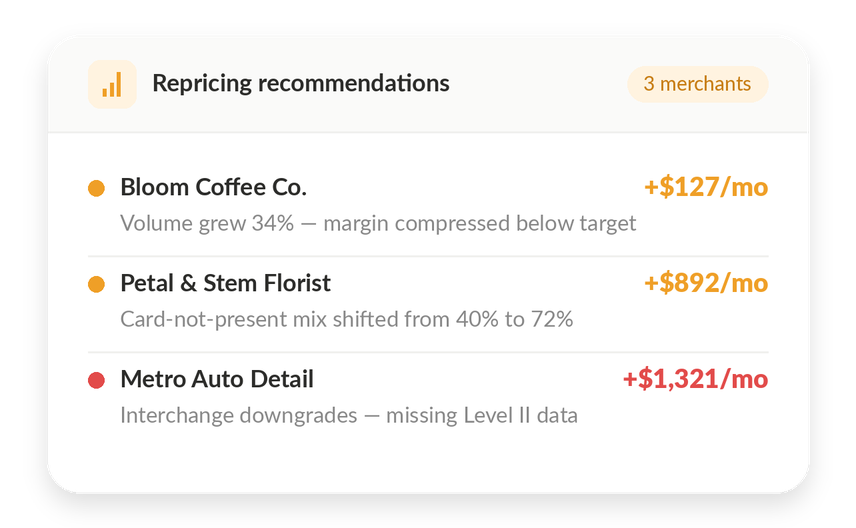
Daily monitoring of total volume, active merchant count, average markup BPS, and average effective rate. Before/after comparison on every reprice. LegitScript monitors the merchant's website; Gratify monitors the merchant's pricing — different surface, different stage.